Category Archives: A Gracious Heresy

My Big Book News

I signed a contract for my book!

After years of work (okay, often sidetracked by work that pays the bills) and a slew of rejections, I signed with Wipf and Stock Press and A Gracious Heresy: the queer calling of an unlikely prophet, will arrive in the fall of 2018.

It really is like a pregnancy. A long, seemingly endless, pregnancy. Scads of creative energy that depends on your blood and bones, heart and mind, to mature into a viable being – that’s what it feels like.  And I am proud and terrified, relieved and anxious. Like any new parent.

NOW I get it that  I have exposed myself and I am like Eve, looking around for a fig leaf. Memoir writing depends on truth telling. And my truth-telling reveals a complex conundrum that is at times humorous, sad, lonely, connected, and very, very, human. But if I can use a piece of well worn wisdom, “In for a penny, in for a pound.”  I don’t know what will come next but that’s nothing new for me. I’ll hang on for the ride and see if I can steer.

Today, with pleasure and trepidation, I invite you to a snippet of the work:

” Frankly, I am the very last person you would consider to be a prophet. Even writing that feels grandiose. My life is untidy. I don’t always do my best. There are times I’ve wanted to give up. More times than I’d like to admit. And even though I am driven by grace I can be harsh in my opinions of others and harsher in estimations of myself. Or worse, I give myself a pass but find it hard to allow for the frailty of others. And there are times I get so pissed off at God I could spit. I am like Jonah who sat under that bush and groused because God extended compassion to the people he despised.

The following tale is a story about how I got myself – or God got me – into the heresy of challenging the church to justice over doctrine and compassion over polity. You might think I’m a heretic and you might be right. I’ve been called worse.

Here is a story about the gracious heresy of my life and an unlikely call to prophetic ministry. Nothing grand. Nothing large. Mostly it’s a story about the risk and the price of being faithful and learning to trust that somehow it makes a difference.”


Easter Heresy

This is Easter,
when our hearts beat with truths
not facts,
pounding the rhythm of
some knowing
of rebirth
love
justice
and promises kept.

This is Easter
when we try to find words
paint pictures
make music
that captures
the unknowable,
all that is beyond
our small imaginings

This is Easter.
This celebration
of grace
beyond explanation,
of hope
transcending dread;
trusting  the inconceivable,
availing ourselves
to a cosmos
filled with tender possibilities.

This is Easter
To be known by Love
in ways that make us fearless
in both life
and death.


Passover Heresy

To some:
It is a heresy to celebrate a religious holiday on a day other than the prescribed date.
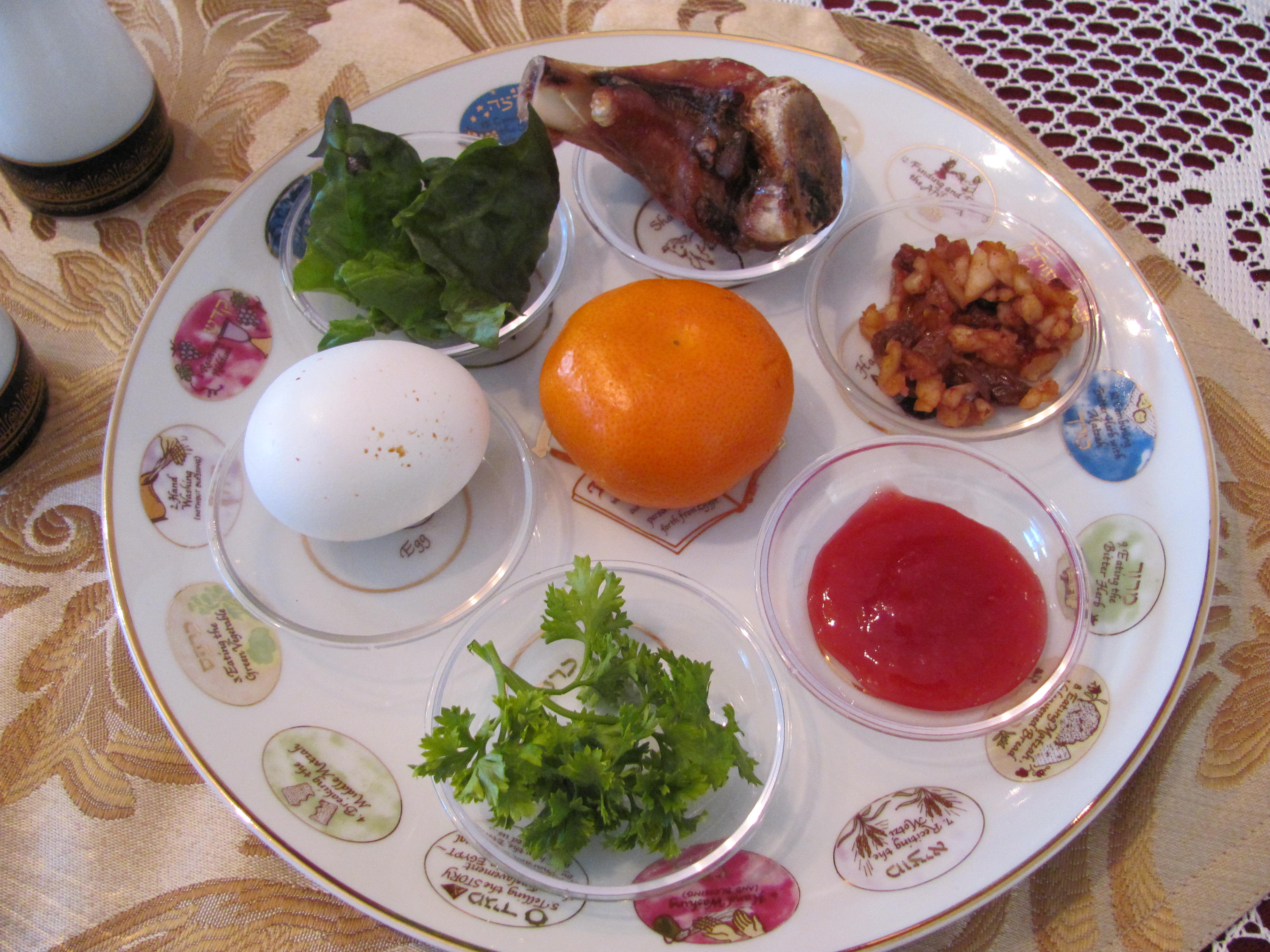
It is a heresy to place an orange in the middle of a seder plate.
It is a heresy to adopt a tradition outside one’s own.

To me, it is only ‘heresy’ when my tradition (Christianity) appropriates the meal to give it ‘Christian’ meaning. The story is universal. It is the story of the Jews. It is the story of humanity. The question for me is, “where do our stories intersect?”.

My answer this year is this:
they intersect in the places we are oppressed
they intersect in the places we oppress others
they intersect when we examine the journey of the faithfulness/faithlessness
they intersect when the story we recall resonates in our hearts and minds

With great thanksgiving for the Jewish tradition of the Passover seder,
we celebrate the meal each year
and we remember
and we learn
and we internalize
and we encourage
and we mourn
and we celebrate
and we learn to hope again

We challenge authority and the misuse of power. We encourage one another to resist. We remember to trust that Godde’s vision for humanity as one of freedom.

And we learn with our bodies. We take it in.
the flatness
the bitterness
the heaviness
the sweetness of safety at the expense of slavery
the price of freedom
the joy of shared stories
and the celebration of hope.

This is our gracious heresy: that our stories are shared and that they call us again and again to remember who we are  to one another and to Godde.

Still A Heretic, Hopefully Gracious

          In an unabashed plug, my memoir,  A Gracious Heresy: the queer calling of an unlikely prophet, will be published soon.  I am at the stage of seeking permissions for works I quote in the text and that is where my story begins.
I asked a poet for permission to use his two line poem which sums up the unexpected confrontations, joy, and challenges that Godde sets before me. It took me a while to track him down because I didn’t know the context in which the poem was published. I did what all good researchers do: I googled him. I discovered he taught at a Catholic university somewhere in West Virginia so I called him and asked for permission directly, assuming he would tell me what publisher to contact.
We had a lovely conversation in which I told him I had written a spiritual memoir and was hoping to use his poem. He said he could give permission and was glad to do it. We talked further and he asked if he could read my manuscript. I was delighted and agreed to send it as an attachment. Here is what followed (redacted to protect the guilty):

Dear XXXXX,

Thank you so much for giving me permission to use your poem, XXXX, in my memoir. I have attached a copy and hope you find it worthwhile.
Warmly,
Connie

Before too long I received this reply:

Connie,
Although I certainly wish you every success, I think we might have a problem here.  The University I teach at is (like me) orthodox Catholic.
You seem like a good person, and so I feel kind of bad to ask you, but could you use a quote from someone else?
We all have to try and be faithful to the Jesus we know.
I’ll pray for you and you pray for me!
Again, I wish you the best.
In Jesus and Mary,
XXXX

Dear XXXX,
          Of course, I am deeply disappointed. I suppose I could have avoided your conflict by not sharing my manuscript but I choose not to prevaricate or mislead about my life and faith. Rejection in the name of doctrine is not a new experience for me though I did not expect it here. I will not use your work since you have withdrawn your permission.
Your poem, XXXXspeaks deeply to my absolute joy in God. Perhaps because of this, I am surprised you do not see the Spirit in the eggplant that is me. Be assured, I am not a good person but I am a child of God and a follower in the Way of Christ.

         Without rancor I concur: I pray for you, you pray for me… we are all a part of God’s body.
In Christ’s love,
Connie

To which he responded:
Thank you, Connie, although I wouldn’t say that I don’t see the Spirit that is in you.  We all need mercy; we all struggle.
(I wouldn’t be at all surprised if you were doing better than I am.)
And thanks, too, for the prayers!

 I only regret that I didn’t expect this. There is no question that this person is warm in spirit and seeking to be faithful.  What is clearer than ever is that I have absolutely no struggle with who I am, only with systems of oppression, especially those in the name of Godde. In the relative scheme of things this is not a big deal but it is an important reminder of the reason I need to tell my story.

I Will Not Be Your Enemy

We can choose not to be enemies.
We share history that is the source for all our struggles, self-definitions, failures and successes. For minorities and women much of that history is bad, even despicable. We have been oppressed, terrorized, marginalized, and repressed. But we have also built communities, resisted the dominant paradigm, and survived unimaginable violence to our bodies and psyches.

So how can we choose to not be enemies? Perhaps more importantly, why should we make that choice?

Women have the front seat on how for us to critique finding common ground with those who would oppress us. I hate the patriarchy and its systemic power to dehumanize one group of people and elevate another. I hate it for the same reasons I hate racism. And ableism. And heterosexism. I hate them all for the the boundaries of ‘us’ and ‘them’ that   form a temple of fear.

Women love men: we love husbands or fathers or sons or friends or all of the above. We do it while existing in systemic patriarchy that devalues our existence and codifies laws about our bodies. Here’s an example: I love my dad. He supported my every dream and did not reject me in the face of questionable choices. He is the first feminist man I can remember – though he would have cringed to be called that. Loving him did not eliminate the ways I was sexualized by a man as a child, groped as an employee, or give me the right to be in charge of my own reproductive health. My dad was my ally even while he benefited from being a man in ways I can’t even imagine.

I don’t want to make the mistake of dehumanizing and demonizing ‘the other’ any more than I want to be demonized myself.  Where will that get us? How will we make meaningful change if we repeat the same patterns?  The real ‘demons’ are systems that oppress.

What if, instead, we worked to find value in our differences rather than fear them? What if to give to one didn’t mean to take from another? What if we embraced the idea and the fact that we are all in this together? That to survive we must reach across the divide? If we are to survive as a nation we must find our way back to one another. We will always have things to disagree about so let’s treat this like a momentous disaster and rally around so that all survive.

Our goal can’t be that we are lock-stepped in agreement about our beliefs. Instead, let’s find ways to see the humanity in one another, to listen to the concerns we have, and to work together for solutions to this nation’s problems that require compromise not only by the oppressed.  Believe it or not, we used to do something like it. The opposing party was referred to as ‘the loyal opposition’. The idea was (and is) to take the best of both sides and find a solution of compromise that meets the needs of both. More compromise may be required by those who have traditionally held power but we can do this if we find our will.

The depth of our polarization deafens us to one another’s needs and will defeat us if we are not careful. For me, it starts here.
I will not be your enemy.

Come and Meet Me in the Middle of the Air


Somebody (everybody!) needs to remember that we share a national identity  that is only possible when we are willing and able to have difficult conversations. We have become ‘the other’ because we are a different color, gender, national origin, ability, age, or political identity. The problem is that the idea of our democracy only works when we are able to reasonably disagree with one another.
Those of us in the Judeo-Christian tradition have the sound advice of the prophet Isaiah (1:17-18):

learn to do good;
seek justice,
rescue the oppressed,
defend the orphan,
plead for the widow.

18 Come now, let us argue it out,
says the Lord:
though your sins are like scarlet,
they shall be like snow;
though they are red like crimson,
they shall become like wool.

“Come now, let us argue it out” or as translated elsewhere, “Come, let us reason together”.  The problem for  us as a nation and society (or one of many) is that we don’t seem to share the values upon which we were founded. Those values have always been our pride and our curse.  There is a gospel song that invites us to ‘meet in the middle of the air’: https://www.youtube.com/watch?v=6VGHfpvkI1c

From the beginning issues have been strongly argued from many sides. Big issues. Moral issues. Deeply personal issues. Issues that, even though we went to war with one another, the idea that we are one nation triumphed. We must  learn to “argue it out’  no matter how difficult the conversations are. Otherwise, political identity supersedes the ideas upon which we are built. Beware, it is happening right now. The era of Trump has obliterated national and cultural norms. (By which I mean things we have mutually accepted and agreed to without codification. For example, we would not call for our political opponents to be jailed.)

We must talk to one another. Unfortunately, it is the task left to the Left. Because talking to one another requires respect, curiosity, and the willingness to listen through another’s fear. We need to be patient and safe enough to the other person to hear their viewpoint. We need to stay calm. We need to do all this because WE recognize our connectedness even when the other side does not.

Let us have the difficult conversations without seeing ‘the other’ as enemy.
To save ourselves we must save us all.

Calling In A Paradigm Shift


I haven’t written since before Christmas what with preparing both our home and the church for the annual celebration. It was a good and full time tinged with the cyclical sadness of the anniversary of my mom’s death.
I preached Christmas and Epiphany services. Old stories. New words. And was struck again with how Christians (I can only speak to my tradition, though I believe it exists in every spiritual tradition) are charged with challenging the dominant social paradigm.
I am not interested in saving of my soul from a vengeful and angry God. I refuse to afraid of Godde. It goes against every light fiber of my being.
Nope. I am ready to call Christians to be Christians and stop being  moral puppets for right wing ideologues. Morality is not about ruling the minutia of the bedroom, the ‘place’ of women, or the arrogance of claiming that the wealthy are favored by Godde.

Here’s the new (for the last two thousand+ years) paradigm Christians are challenged to shift into:
– share so that there is enough for everyone: food, water, housing, healthcare
– act out of love, not warm-fuzzy feelings, but with the intent for the well-being of others
– claim the power to forgive so that you are freed from destructive impulses and a space is made for the possibility of peace.
– be a compassionate conduit of grace
– see the face of Godde in absolutely every creature you meet.
– work against oppression in all its forms
– don’t base your actions on results you can calculate but  trust the call to live in a different way
– don’t be afraid

To all you Christians and former Christians out there: it’s time to take back our faith. It has been coopted by the powerful and twisted in to shapes unrecognizable. Even as a pastor I am sometimes ashamed to say I am a Christian because of what it has (rightfully) come to mean to the majority of people. But now I want to invite all you closeted Christians, all you exes who have bitter bile in your throats, all you who have stretched beyond the confines of rigid morality, all you who have been oppressed and broken by the church to take back our faith and drink in the sweet nectar of grace.  It’s time to become the paradigm shift Christ calls us to by living it into existence. It’s time to do  the faithful work of changing the world.


Advent Revolution: Be Like Mary


Godde is shocking and if you aren’t shocked by  Godde then you haven’t been paying attention.
Since forever the clash of the religious has been between piety and justice. Righteousness and goodness.  Godde always strains towards the people we reject, devalue, or dehumanize. Or should I say ‘demonize’ ?  And then she goes and does something radical by inviting the people one least expects (or likes) to be Godde-with-us.
Like women. Like foreigners. Like children. Like the outsider and the oppressed.
Can you see Mary, mother of Godde-with-us, in the picture above? If not, then maybe you have been looking in the wrong places. Morality doesn’t lie in transcendence (the way Mary is usually depicted), it lies in the gritty choices of everyday life. Is what I’m doing benefitting only me or is it in service to the greater good? Do I choose to make money over clean water and air? Fair wages? Accessible healthcare? Does my vote reflect not only my interest but also those of  the  most vulnerable among us? Do I place more value in the humanity of a person than their adherence to my sexual, gender, or cultural norms?
These are the questions we need to be asking. These are the concerns to which Mary calls us to when she is overcome with thankfulness and sings an ancient song of liberation and freedom:
‘My soul magnifies our Godde,
47     and my spirit rejoices in Godde my Saviour,
48 for She has looked with favour on the lowliness of her servant.
    Surely, from now on all generations will call me blessed;
49 for the Mighty One has done great things for me,
    and holy is her name.
50 Her mercy is for those who hold her in awe
    from generation to generation.
51 She has shown strength with her arm;
    and has scattered the proud in the thoughts of their hearts.
52 She has brought down the powerful from their thrones,
    and lifted up the lowly;
53 and has filled the hungry with good things,
    and sent the rich away empty.

This is what counts as shocking to those who believe that their religion saves them from eternal damnation or that the amount of money they have amassed shows that they are favored by Godde. Which, in a way, is seductive because it gives the impression that we are in control. If I remain a virgin till marriage, don’t come out, don’t transition, don’t smoke, don’t drink, don’t curse, don’t wear make-up… then I can control my fate. But piety never protects us. Instead, it  sets up the juicy conundrum that men can both objectify and abuse women with impunity. In the name of God.
 Godde calls us  to revolutionary actions not pious acts.  Mary is overcome by Godde and her response is to give voice to Godde’s call for liberation and freedom.
In these days when we look for Godde-with-us, check out the places you don’t usually look and the people with whom you don’t feel comfortable. Women who are pushy. Immigrants. #Me, too. #Black lives matter. They are doing the holy, revolutionary work of Godde.


Advent Call to Resistance

Comes now the time we wait in darkness and breathless anticipation for hope to be born. Hope against hope.

This is the darkest Advent season of my lifetime. We yearn for the words of Isaiah to come to pass:
The spirit of the Our Godde is upon me,
because Godde has anointed me;
and has sent me to bring good news to the oppressed,
to bind up the broken-hearted,
 to proclaim liberty to the captives,
and release to the prisoners;

The prophet’s words call for our compassion to deepen – especially those of us who have never been hungry, or frightened, or powerless, or foreigners. This year we hear them differently. Suddenly we face the reality of being on the down side of the widening schism between rich and poor. The middle class shrinks and we can no longer count on our water being clean, our air being breathable, our livelihood being enough to support us. Our children are vulnerable to sexual predators. Our black men, imprisoned and exploited in unconsionable numbers, need to be released.  Women and people of color, the poor, the LGBT+ community, and  immigrants  desperately need to hear good news for the oppressed as our rights are being marched back by jack-booted thugs.

The image of an anticipated babe in utero, of a fallow garden with seeds beneath the frozen earth,  conjure the thought that something powerful happens in the dark. Growth, possibility, time, and space to gestate miracles. This Advent demands of us that we birth Christ into the world so that when we claim that followers in the Way of Christ are, indeed, the body of Christ, then this dark season impels us to remember what that means and to grow our understanding.

         We are the ones who must risk feeling the Spirit of Godde upon us, calling us to do impossible things on behalf of all humanity.
          We are the ones who must bring good news to the oppressed, even those of us who are oppressed, by speaking against the power that suppresses and finding our power to act and speak as we are empowered to act as the Holy Spirit descends this Holy Season.
          We are the ones who must gather to ourselves those who mourn, whose families have been torn apart by a racist immigration policies, and Dreamer’s who are our children, being forced to leave the only homes they have ever known.
          We are the ones who must stand for those imprisoned and demand justice.
          We are the ones because we claim to be the Body of Christ,  the living aspect of the one who came to liberate, heal, and lift up the least of these.

This Advent, we retreat into the dark, not a darkness that blinds, not a darkness that constricts our souls, but into the rich dark that nurtures our spirits and grows our imaginations so that we might bring to life great hope and find our power to stand and speak and live the promises of Godde embodied in our world.


Ecstasy

Changing it up with poetry                                                         

                                                        Ecstasy

Part 1

 My first lessons were of joy –
soaring church music
voices blended
organs boasting and groaning
pianos splashing fountains of notes
onto my untutored ears.

And gladiolas
smelling of earth and sunshine,
rolled into wet newspapers
their green tang permeating the air
as we drove to church late Saturday afternoon.

And the sanctuary
empty and grand
echoed our footsteps and whispers
while light cascaded in dusty shafts
through stained glass
and statues in their niches
gazed benignly at my grandmother
as she placed the glads,
tall and vibrant
in crystal vases
upon the altar.

On Sunday
common flowers
transform into icons
burning with holy light.

My mother taught me about Jesus,
singing in her sweet, slightly off-key voice:
“Jesus loves the little children
All the children of the world,”

I joined in
sometimes imitating her soft tones,
sometimes bellowing the words
“Red and yellow, black and white,
They are precious in his sight,’

The story told
the truth distilled
the gospel internalized,
love without boundaries
grabbed me up
and never let go.
“Jesus loves the little children of the world!”

And my heart broke open.
“Please, please, God,
let me be here when Jesus comes back!”

And I was filled with wanting
like waiting for Christmas morning to come
the anticipation lovely and powerful.
When Jesus came back there would be joy
like singing ‘alleluias’ real loud
like smelling fresh pine needles
or swinging so high your toes could touch a cloud.

And love as good
as snuggling on my mother’s lap
breathing in and out just the same.
As good as when my heart
hugs the hums of bumblebees.

Part 2

Now joy flings me
into the mystery
of my pulsing body and blood,
breath and bones.

“I..I know I’ve been changed!”
The throb of the song and
the thump of my heart
beat together.

“I..I know I’ve been changed!”
I stomp in time,
hands stinging
as they clap, clap, clap,
releasing the rhythm
into my bloodstream.
I cannot stop this clapping,
this stomping,
this singing.
at the top of my lungs,
air purged,
reaching some notes,
missing others
carried away in the chorus swelling around me.

“I..I know I’ve been changed!”
I sing louder,
full-throated
not caring if I am off-key,
sharp or flat.
Lost in the tumultuous sound
I rise,
my feet no longer hit the floor to stomp.
I am Buddhist priest
floating inches above the ground.
I am flying witch.
I am whirling dervish.

Flinging my hands in the air,
bright red from clapping,
they burn,
eased only by the wind I create.

“I..I know I’ve been changed!”
Caught in the music,
woven into the chords,
tossed to the rafters
notes thrumming
in my breath and heartbeat.

The ‘I’ of me
Becomes the ‘we’
of a hundred lifted voices.
The song urges us to completion.
I heave a breath
And bellow the next line.
And another.
And another.

“The angels in heaven done signed my name.”
Slowing
almost imperceptibly
And I sway back into my body
arms heavy
hands tingling
sweat dripping between my breasts
feet wanting
to keep moving, moving, moving.
I fight against what I know is the last refrain:
“The angels in heaven done signed my name.”

I lift my face
and exhale.