Making a Way

making a waySo I’ve been wondering: is listening truly the radical act I think it is?

I ask this because I hesitate to make absolute statements (even though some of you might challenge that if you follow me on Facebook). But here’s the thing- I post things that I ponder about or worry on or that confront my concerns, anxieties or things I dearly love or that move me or make me laugh. I post things that are beautiful. Relative to the amount I post, I write or comment very little.

Mostly I listen to reactions. When I feel moved to speak on a contentious topic I try to remain both authentic and vulnerable. And willing to change. Because, as my dear friend reminds me, true listening requires a willingness to change.

I am inviting people to listen with the ability to change, to empathize, to be challenged as a radical act of peacemaking and bridge building.

I get it how difficult it is to be vulnerable, real, authentic about one’s deepest self in the face of bigotry, hatred, and mostly fear.

I extend this invitation only to those who have the support and strength and willingness or ‘call’ to be that open. As a woman, lesbian, Christian, feminist and white, I am in no way suggesting this is the correct or only path for anyone. It is not the only way. It is one way and it is an important way but we also need people who resist. We need people to call out bigotry and hatred and injustice. We need people to stand for justice.

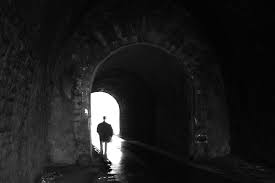
It is not an either/or proposition. The call to radical listening is a part of the larger picture. It is an invitation to mutuality and community. It is another kind of justice seeking. It is making a path through the wilderness.


An Invitation to Radical Bridge Buidling

bridge buildingI am a radical bridge builder and I want you to be one, too.

Somewhere in my upbringing with the experience of many cultures, many races and many people, I came to the absolute conviction that human beings are more alike than different. It is really difficult for me to go to a place of ‘us’ and ‘them’ – though that thinking permeates our cultural and political landscape.

It is hard to be a bridge builder. As difficult as it is to be a vocal activist. Both require putting one’s self on the line. Both are the important work of change and justice.

Bridge building asks of us a different kind of courage. If your call is to put your body on the line as an activist, then do it. And, oh yeah, they aren’t mutually exclusive. Both types of work needs to be done.

What is the courage required to build bridges? First, is the courage of vulnerability. You have to be open about yourself to people who dislike, hate, or fear you. You have to be willing to expose parts of yourself that are real, and sometimes the parts of you that are tender, as an invitation to mutuality.

Then you must have the courage to listen. You have to listen to things that are repugnant, hateful, fearful and, often, ignorant. You have to listen without the immediate agenda of being heard. And you have to listen with a heart of compassion as well as with emotional intelligence. Believe it or not, this is change making. This is the slow process of mutual humanization that opens the door for new understandings and new relationship.

Here’s the thing: there will be many times when you speak and will not be heard. Helping someone to hear is an important task of bridge building. It requires patience and gentleness because when people can’t hear it is because they are afraid. It may present as anger, aggression, or hate but behind those leading feelings is profound fear. And when people are afraid the most radical thing we can do, the most loving thing we can do, is walk with them through their valley of shadows.

So… I invite you to join me and be a bridge builder, too. Know that it is difficult work that requires vulnerability with those who are hostile toward you, compassion for those who hate, and the strength to listen to those who disagree with you.

We who work for justice crave radical change. We work to change laws and systems because injustice saturates our culture. We must march. We must VOTE. We must speak and not be silenced. We must challenge ourselves to root out our own internalized racism, homophobia, sexism, ageism, ableism and classism.

And we must do the hard work of building bridges. Because who we are when we get to the other side is important.

I Forgot to Be Afraid


In 1973 I fell in love with a woman. We walked down the street holding hands and swinging our arms, laughing and I, filled with some kind of holy joy, sang the Doxology. I was so happy I was sure the whole world would be happy with me. All the world loves a lover, so they say.

That’s the last time I felt safe. Before that I knew I was not safe as a woman. Keys in hand when I approach my car. Not going out at night alone. Heightened awareness of my surroundings. How I traverse the world are so internalized I usually am not conscious of why I make the choices I do. Usually not conscious of the underlying fear that has become a part of me.

Being LGBT invites a different kind of fear. Some of us use the privilege of our appearance to feel safe. Some can’t. Many don’t want to. I chose to be open about who I am, not trading in on my appearance, understanding the possible consequences.

Being gay, whether you are out or not, means being bombarded with hate speech, threats of violence, actual violence, rejection by loved ones, communities, and spiritual homes. It takes a strong person to move in the world as openly LGBT. When gay marriage was legalized by the Supreme Court we believed the tide was turning. And it is. It also became a call to arms for our haters. In my better moments I realize that what drives the haters is fear.

So then North Carolina happens, legislating base discrimination. And then Orlando happens and our worst fears are met. The denial we found comfort in when it doesn’t happen to us is the same denial women lean toward when another woman is raped or harmed. “It won’t happen to me because I make different choices.” We use it as a psychological shield because it is intolerable to live in constant fear. The truth is, one can only handle so much hatred, rejection and violence. That is why so many of our LGBT young people commit suicide. That is why the need for safe spaces, like Pulse, like affirming churches, like safe campuses, are so important to us.

Our brothers and sisters were killed and injured in what we thought was a safe space. They walked through the doors and let out the breath they were holding. No hate speech here. No rejection. No hatred. Only the freedom of one another’s company. It is a good thing to not be afraid.

Sometimes I forget to be afraid. I pray for the day when we can forget to be afraid: African-Americans, women, LGBT, immigrants, our haters… The task before us, our nation and our world, is to confront the ignorance that perpetrates fear and anger wherever it raises its hideous head. In the boardroom, the classroom, the chambers of government, the sanctuaries of churches.

We have a big job ahead of us. Let us proceed with courage in the memory of those who were murdered and in honor of all of us who survive.


Why I Support the Draft

F08T42TFBQ33X0E.MEDIUM

In the 1970’s I was adamantly against the draft. We were in a war that I found morally abhorrent. My father, a retired army sergeant, was my counterpoint and I had all the arrogance of passionate idealism. I am still passionate and idealistic  but tempered by experience and information. I also remember the grief of my father as his ideals about who we were as a nation was shattered by that war.

Here is how and why I changed. Since the draft has been abolished our armed services no longer tap into the talents of the most educated – those with a grasp of political history or philosophy or anthropological understandings of differences in cultures. Second, and perhaps most important, is that those who make the decisions about going to war are no longer are forced to consider the fate and/or welfare of their own children. They have no pony in the race and their decisions don’t appear to be about people but about testosterone driven numbers and power.

We know that people of wealth and power are able and often do disassociate from the concerns of the middle and lower classes. Somehow those children are ready pawns any time the political ego calls for “boots on the ground”. I cannot help but believe that the conversations, debates and decisions would look much different if all children were required to register for the draft.

We really do need leaders with military service. Eisenhower stepped off the battlefield into the Presidency. His experience as the leader of our Armed Forces led him to be one of our strongest, most eloquent, advocates for peace:

“Every Gun that is made, every warship launched, every rocket fired signifies, in the final sense, a theft from those who hunger and are not fed, those who are cold and not clothes.  This world in arms is not spending money alone. It is spending the sweat of its laborers, the genius of its scientists, the hopes of its children.  This is not a way of life at all in any true sense. Under the cloud of threatening war, is humanity hanging from a cross of iron.”                 Dwight D. Eisenhower, from a speech before the American Society of                                                                                               Newspaper Editors, April 16, 1953


Death and the need for mortality officers

images-3

When my father, a retired army sergeant, passed away at the age of 79, the army sent a mortality officer to our home. He attended the military funeral and then, over the next several weeks, came to the house and walked my mom through all the required paperwork: getting the death certificates, contacting the army and civil service regarding retirement benefits, dealing with bank accounts and insurance.

In the midst of my mother’s and our family’s grief a sympathetic outsider helped manage all the details of death.

Recently my brother-in-law, a retired Air Force officer, passed away and I called the base nearby. They put us in touch with a ‘casualty officer’ who performed the same services.

As a pastor I have been a ‘mortality officer’ for members of my community at times. I have had to self-educate to figure out paperwork, social security, insurance, retirement, bills owed- the whole gamut of issues that come with death. I am willing to perform those functions and try to see it as a way of being present.

But as pastor my call is to be available for spiritual and emotional support.
I say all of this to name a need in our culture. We have sanitized death to the point where it is an alien event to many, many people. Some are hesitant to write wills because of a superstitious fear that we are inviting death. Widows or widowers are confronted with the possibility of losing the family home. How to probate a will. How to deal with the issue of no will.

We sanitize death and shut it away. Out of sight out and out of mind. And then when death touches our lives, we are at a loss.  Especially the unchurched, I would imagine. And everyone, whether they belong to a church or not, deserves support in the trying time of the death of a loved one.

Here is my thanksgiving: that the military takes such good care of its own.
Here is the question I am left with: how can we, as a people, provide ‘mortality officers’ for everyone?

What is in my panties?

sexy-kitty-pantiesWe are only a generation away from the time when ‘vagina’ wasn’t a word said in polite society. Before that, if I recall correctly, it was ‘privates’ – or if you were progressive like my mom was – one referred to what was in one’s panties as ‘genitals’.

That was the good stuff. On the streets it was twat and cunt and pussy and gash… I could go on and on.

Men seem to have a love/hate relationship with female genitalia, even gay men. I was on the board of a gay/lesbian organization (that I soon left) where the men referred to women as ‘fish’. To demean another man call him a ‘pussy’. To demean a woman spew ‘cunt’ at her. Or a gazillion other slang names. I refer you to this slang dictionary website: http://onlineslangdictionary.com/thesaurus/words+meaning+vulva+(%27vagina%27),+female+genitalia.html

Now – thank you, Eve Ensler, we proudly use the words ‘vagina’ and ‘vulva’. Even in public. Even on prime time television.

The rest of the country seems to be afraid of what is in each others’ panties, jock shorts, boxers or thongs.                                                                                                                                                 Here’s the deal. The only person whose business it is about what is in my panties is me. And anyone with whom I care to share the information. It is private. Not only is it my privacy to control, every one should have the right to that privacy.

Maybe it’s a good idea for us to begin calling what is in our panties, tighty whitey’s, boxers or thongs ‘privates’ again. Then when someone enters a public restroom we would all remember that what is in their drawers is ‘privates’.

Paint and Change

paint-can-11

Color is a palate of emotions. Blue is calm, green energy, red strength, yellow openness.

My life changed significantly in the past three years. The colors around me kept me in places I no longer want or need to be.  So I changed colors. Not for me the soft gray, charcoal and dusty mauve. I no longer wake to periwinkle blues. Grief muddied all the colors around me any way and the dulled colors bound me to relationships that no longer exist and a life no longer lived.

So I paint. No white ceilings for me, I wrap entire rooms in color. Now I wake to apple green. I gather family and friends in a room of white blush, robin’s egg blue and teal.

Colors arise from my insides and move into the world like a life force, like dandelions pushing their way through a crack in the sidewalk. And color gifts me from the outside in, beckoning me to new life. Reminding me to live again. To embrace the world and be a part of it.

I reclaim my life with paint. Color me Connie.

Confessions of a faithful patriot

flag

Let me unpack that for you because I hear a million red flags flapping in a hurricane force wind.

In the U.S. every citizen can be involved in the political process. (though some rights in some places have been repressed: i.e. voter participation) For me being political means acting in such a way as to influence governance. I vote. I write letters. I make phone calls. I sign petitions. I protest. Like almost everyone else in the country I want to have a say in how we run this nation. Here’s the rub: what I want or believe is (or should be) checked and balanced by the constitution of the United State. That means if I want to legalize discrimination against any group it can be challenged in court. It would not be enough for me to believe that a group was sinful or demonic or non-Christian or…

I am a Christian. I try not to cringe when I say that – not because I am ashamed of my spiritual journey but because I know I will be lumped into a group that I find abhorrent: fundamentalist, literalist, fear-mongering people who have hijacked (very successfully) the public perceptions my faith.

As a Christian I speak and act politically. I support economic policies and social programs that feed the hungry, home the homeless, make prisons tolerable, help people get the mental and physical healthcare they need, create jobs, and liberate the oppressed. I expect my government to allow everyone the freedom to follow their spiritual path except when someone’s religion infringes on basic rights – say the right to marry or use the bathroom.

I am a patriot. I am not nationalistic. Not that I think our country is without significant and severe problems. But the ideas our nation is founded on inspire and enable the movement toward an ever-deepening understanding of justice.

In this frightening time when the politics of the right stokes fear, hatred and divisiveness I still believe that the essence of our national identity is something very different. We can find our way forward. Not to perfection, but to the ongoing process of understanding and implementing freedom and justice for all.

Rather than let the religious right abscond with Christianity or the Tea Party with the Constitution,  we must take back the words and the meanings. Expand them with new and greater understandings as we arc slowly toward justice.

So today I plant my flag. I am a Christian (progressive, feminist, justice loving) and a patriot (grounded in the ongoing movement toward freedom and equality for all with a love of the diverse cultures of our nation).  Today I take back the meaning of those things dear to me.


A short good-bye

13137_10151300548633803_1002071737_n                                                     My mother died December 20, 2014.

The picture above is from her 90th birthday party. A hundred and twenty of her closest friends – including many folks from out of state – joined in the celebration. At one point we had open mike for people to share stories.  There was a repetition of themes: she loved life, she loved without borders, she served without acknowledgement,  and she accepted unconditionally without theological contortions.

She woke up every morning attuned to Jesus’ command to love Godde and neighbor. And she did. Every day in a myriad of ways.  After the party was over (an indoor picnic- it was February after all – BBQ,  potato salad, slaw, deviled eggs, 12 homemade cakes and gallons of homemade ice cream) I asked her what she thought about what people stood up to share.

“I kept wondering who they were talking about.” she said.

This is how I will remember her: laughing, joyful, loving, quietly serving, humble, and deeply in love with Godde.

She always told me she wanted to die in her sleep. (Don’t we all?) And she came about as close to that as possible. December 17th she went to a Christmas luncheon, ate dinner with me of homemade tomato-basil soup and fresh bread, played bridge until 10 that night and shortly after our guests left, suffered a major hemorrhagic stroke. At the emergency room I refused to have her intubated and the next day we moved her to hospice.

For three days I served her.  She passed quietly with myself and my daughter in the room and a crowd of loved ones keeping vigil outside. I opened  the window so she could feel the fresh air on her skin. And I sang her over. I sang her favorite song, In the Garden and the song, unbidden, that came out of me as I stroked her hair, Jesus, We are Here. 

When her spirit rose from her body I washed the vessel that had gestated me, held me, accepted me, honored me and loved me.  I have thanks for each part of her as I blessed her hands, feet, womb, and heart. I brushed her hair, dressed her in red with matching red lipstick and a spritz of perfume as I loved her from life into death into life.

This short good-bye is what she would have wanted. For me, the good-bye will last until I greet her at the hour of my own death.


retro- Wednesday- How Can It Be Different?


images

originally posted August 16, 2010

How different can you ‘do church’ from traditional models?  So far the answer is a resounding ‘somewhat’.

Here’s the thing: we want to share power.  We don’t want to replicate any kind of hierarchy.  We named ourselves Circle of Grace because all the points on the circle are on an even playing field.  In theory that translates to equal or shared power.   In practice, people are often uncomfortable with the thought of exercising power.  Maybe they are afraid of being ‘wrong’ or maybe they are afraid they will have to ‘bring it’.

In our model everyone has a voice.  That’s a good thing.  What’s difficult (I’ll refrain from saying ‘bad’) is that not everybody is willing to exercise his or her power.  As feminists, we redefined power.  For us, power isn’t ‘power over’ anything.  Power is what we share.  For some of us it is uncomfortable – but we agree it is important.

This breaks down pretty significantly when commitment and responsibility are iffy.  It is a pretty big trade off.  For some reason, in hierarchical power structures those with power are able to require a certain amount of responsibility.   Not so much in a non-hierarchical situation.  In my bad moments, I hate that.  I hate that we don’t have a structure I can wrangle to get something done quickly, without discussion or dissension.  Sometimes I hate it that everyone has a voice but not everyone has the inclination to do the work that needs to be dome.

So how different are we from more traditional churches?  Sometimes not at all.  Sometimes power lands in the lap of a few because of lack of interest.  Kind of like state and federal elections.  We have the power to vote, but too many people don’t give enough of a damn to exercise their power.  As pastor, I am sometimes left with too much power by default.  (Default: no one else wants to do it)  Fortunately, I don’t want the power even when I have to exercise it.

Sometimes we are very, very different from traditional churches.  There is no power of ‘right thought’ or ‘right belief’.  One of the most challenging aspects of being in our community is that we are not bound by shared belief.  There may be someone who believes in substitutionary atonement and another who vehemently does not (in fact most of us don’t).  We have had times of members who opposed abortion and those who worked for choice organizations.  We have learned to make room for one another.

That’s the wonderful part.  It is wonderful enough to balance out the trials of a lumpy sharing of power.  How different can it be?  Different enough that we keep on trying to figure out how we’ve been socialized and work against what is easy or comfortable.  We know we are on a huge learning curve.  I guess that’s how different it is.