
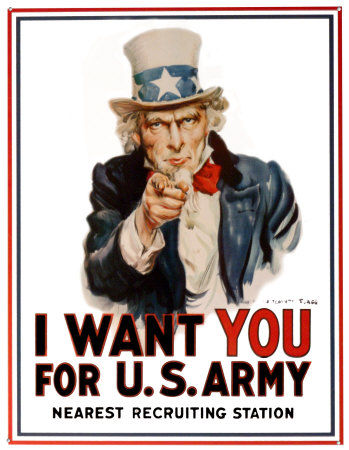
In the 1970’s I was adamantly against the draft. We were in a war that I found morally abhorrent. My father, a retired army sergeant, was my counterpoint and I had all the arrogance of passionate idealism. I am still passionate and idealistic but tempered by experience and information. I also remember the grief of my father as his ideals about who we were as a nation was shattered by that war.
Here is how and why I changed. Since the draft has been abolished our armed services no longer tap into the talents of the most educated – those with a grasp of political history or philosophy or anthropological understandings of differences in cultures. Second, and perhaps most important, is that those who make the decisions about going to war are no longer are forced to consider the fate and/or welfare of their own children. They have no pony in the race and their decisions don’t appear to be about people but about testosterone driven numbers and power.
We know that people of wealth and power are able and often do disassociate from the concerns of the middle and lower classes. Somehow those children are ready pawns any time the political ego calls for “boots on the ground”. I cannot help but believe that the conversations, debates and decisions would look much different if all children were required to register for the draft.
We really do need leaders with military service. Eisenhower stepped off the battlefield into the Presidency. His experience as the leader of our Armed Forces led him to be one of our strongest, most eloquent, advocates for peace:
“Every Gun that is made, every warship launched, every rocket fired signifies, in the final sense, a theft from those who hunger and are not fed, those who are cold and not clothes. This world in arms is not spending money alone. It is spending the sweat of its laborers, the genius of its scientists, the hopes of its children. This is not a way of life at all in any true sense. Under the cloud of threatening war, is humanity hanging from a cross of iron.” Dwight D. Eisenhower, from a speech before the American Society of Newspaper Editors, April 16, 1953
When I was in high school, about the same time you were, I was just as passionate. I came home one day and told my mother we should have an all-volunteer army. My mother, who was a veteran of World War II and a volunteer, said no. She said that to have a volunteer army you have to have a class of people so bad off that fighting in a war looks good to them. I hate to admit it but I think she was right.
Very well written but concerning. The reason I always questioned the draft is that decisions about the lives of the people required to sign up were made on a level without regard for those lives.
A draft should be about more than the military. If you draft citizens for some type of service, include infrastructure support so that we can put people to work rebuilding America! Even the military could be made up of more than just fighters. Those who object on legitimate grounds could serve in support services such as supply, clerks, communications, development of protective materials. There is so much more that is possible.
Variable enforcement of the draft in the “old days” meant that those who could buy their way out often did.